127 film
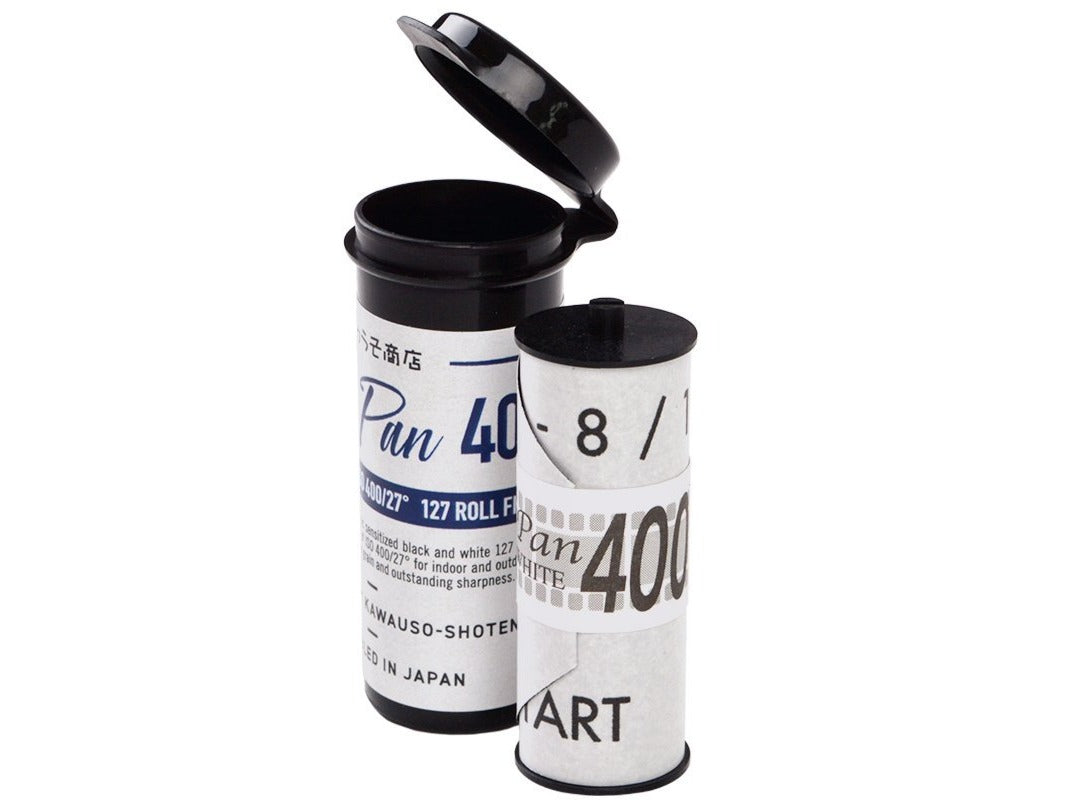
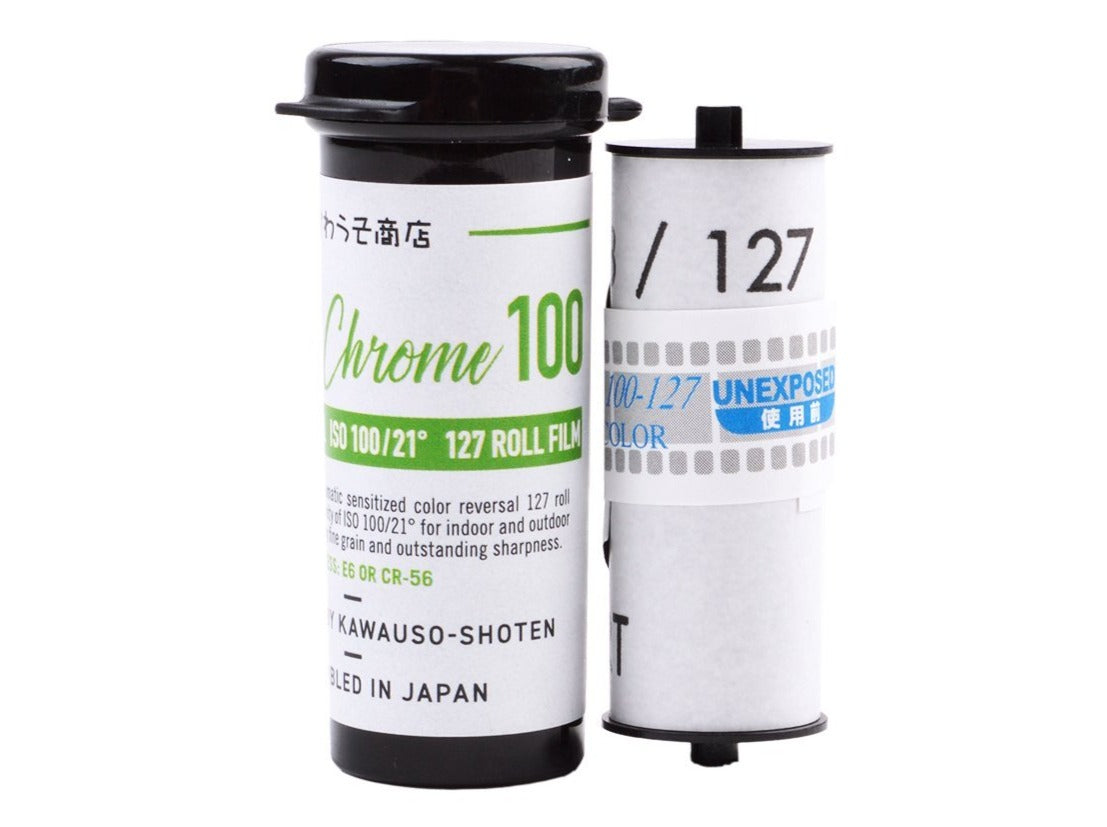
127 film is a vintage roll film format, roughly midway in size between 35mm and 120, once hugely popular in box cameras and later 1950s-60s models. Original manufacture ended decades ago, so today's 127 supply comes almost entirely from small specialist companies respooling and reperforating other film stock by hand. Compare 127 film prices from UK retailers on Filmproof.



About 127 film
What is 127 film?
127 was introduced by Kodak in 1912 for its Vest Pocket Kodak camera and went on to be widely used in classic box cameras and later 1950s-60s cameras like the Baby Rolleiflex and Yashica 44, typically producing 4x4cm or 4x6.5cm negatives on a compact spool.
Mainstream production of 127 wound down through the late twentieth century as 35mm and 126 cartridge film took over the consumer market, and the last major manufacturers stopped making it some years ago. It survives today because a handful of small companies still hand-cut and respool other formats down to 127 size.
Popular 127 film stocks
127 supply comes from specialist respoolers rather than major manufacturers, working with black and white and colour base stock sourced from established makers and cutting it down to fit 127 cameras and spools. Choice is limited to a small handful of products at any given time, and availability can vary.
Because it's a genuinely small-scale, hand-produced supply chain, expect higher prices per roll than mainstream formats, and don't expect the same consistency as a factory-coated 35mm or 120 roll.
Buying and shooting 127 film
If you've inherited or picked up a vintage box camera or a Baby Rolleiflex, 127 is the only way to shoot it on genuine roll film, so it's worth checking stock before assuming the format is dead. Because production runs are small, roll counts and availability shift more often than mainstream formats.
Filmproof tracks 127 film stock across UK retailers, helping you catch it when the small specialist suppliers who keep the format alive have rolls available.